What is it
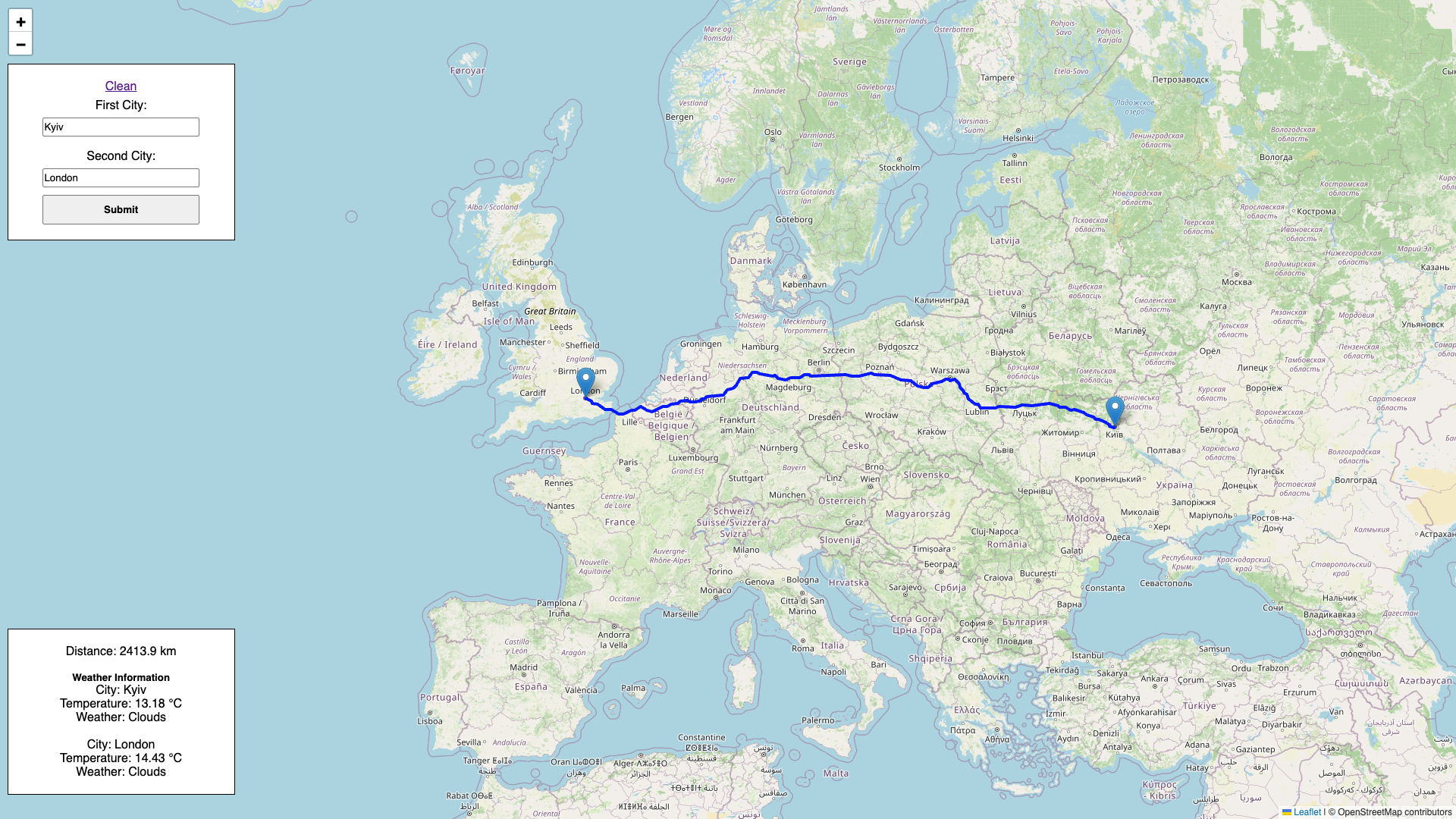
A Django REST API (+ Leaflet frontend) that returns driving route geometry and live weather for both ends of a trip in a single request. The client sends two city names; the server resolves coordinates, fetches the route polyline, and returns weather conditions for origin and destination together in one JSON response.
Problem it solves
Combining route data and weather data normally requires two separate API calls from the client and two different providers. Route Weather Python does that fan-out on the server, returning a single unified payload so a frontend only needs one request to render a map with weather overlays at each end.
How it works
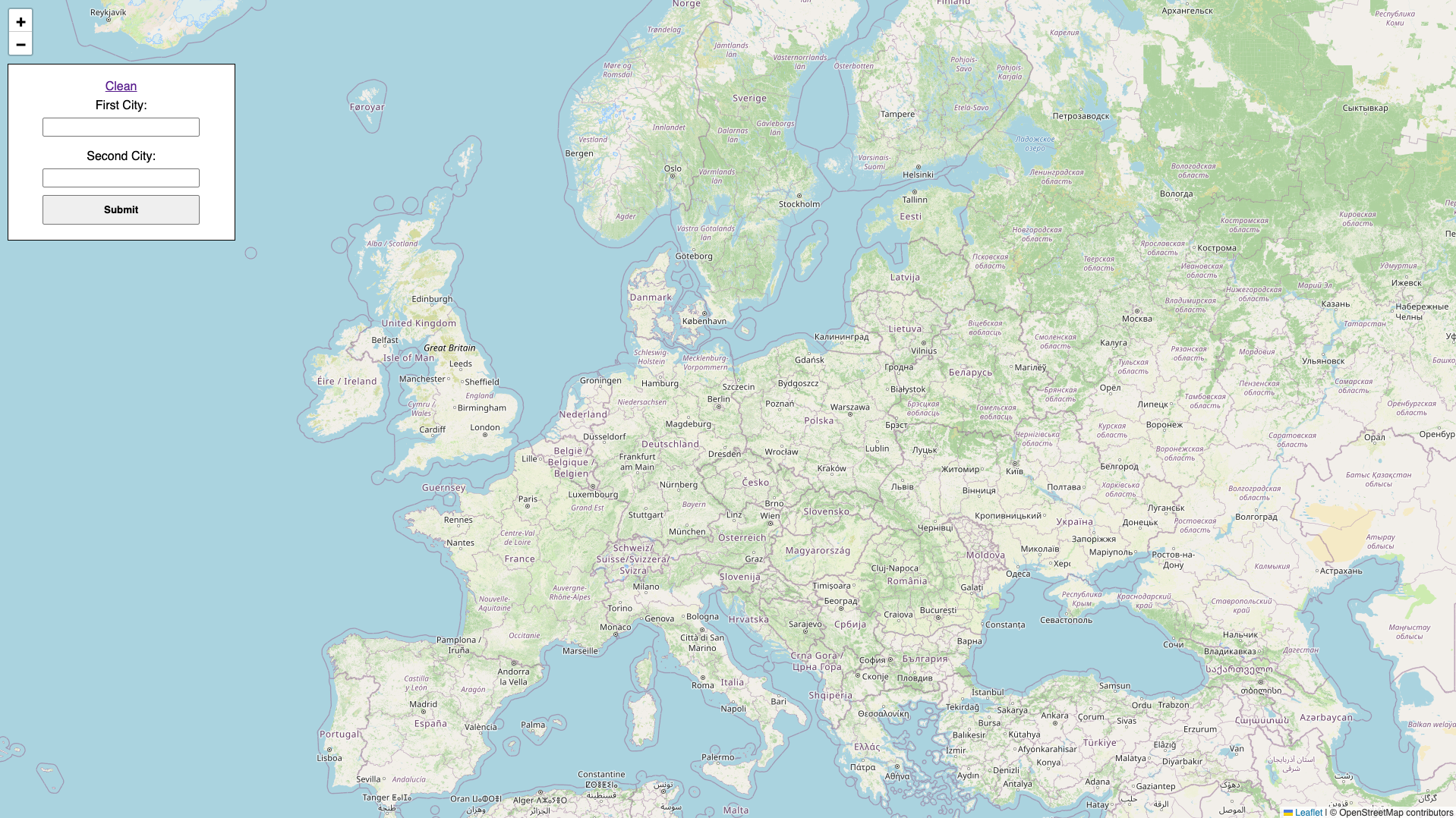
- Frontend: A Leaflet.js map served at
/— draws the route polyline and shows weather cards at each endpoint. - Backend: Python 3.14 + Django 6.0 + Django REST Framework 3.17. No database — the app is stateless.
- Service layer (
api/service.py) — three classes, each wrapping a free external API: GeoCodingService— Nominatim (OpenStreetMap)/search; converts a city name to(lat, lon)RoutingService— OSRM public routing engine/route/v1/driving; returns a full GeoJSON polylineWeatherService— OpenWeatherMap/data/2.5/weatherwithunits=metric; returns city name, temperature (°C), and weather description- Endpoint:
GET /api/route/?start=<city>&end=<city>— geocodes each city, fetches weather for both, fetches the driving route, and returns a single JSON payload.
Response shape
{
  "start": { "lat": 50.45, "lon": 30.52 },
  "end":   { "lat": 48.85, "lon": 2.35 },
  "route": { "geometry": { "type": "LineString", "coordinates": [...] }, "distance": 2400000, "duration": 86400 },
  "weather": {
    "start": { "city": "Kyiv", "temperature": 18.4, "description": "Clouds" },
    "end":   { "city": "Paris", "temperature": 22.1, "description": "Clear" }
  }
}
Setup
Requirements: Python 3.14, uv, an OpenWeatherMap API key.
# install dependencies
uv sync


# run
uv run python manage.py runserver
Open http://localhost:8000 for the map UI or call the API directly.
Docker
docker build -t route-weather .
docker run -p 8000:8000 --env-file .env route-weather
Results
- Single endpoint delivers route geometry plus weather for both cities in one round trip
- No paid mapping SDK required — OSRM and Nominatim are fully open-source and free
- Stateless — no database, no migrations, no runtime state
- Decoupled service layer makes swapping any upstream provider a one-file change